

When I tell people I’ve been to Mexico City 12 times, they usually ask why I like it so much. Besides the obvious answer (food!), one of the biggest reasons is how verdant it is, with many streets, parks, and buildings featuring incredibly lush greenery. It’s not just a concrete jungle—it’s almost a literal jungle too.
This had led me to think a lot about greenery in cities. Here are 6 observations from cities around the world:
1. Mexico City
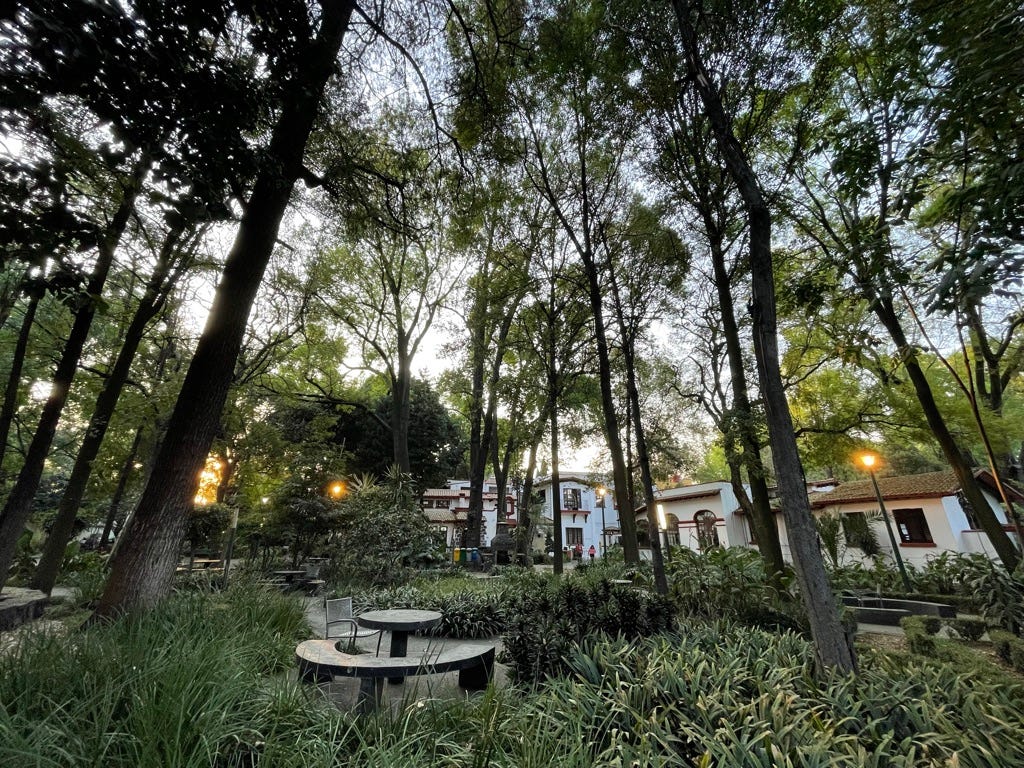
I didn’t really know what to expect the first time I visited in 2017, but I was immediately struck by all the greenery in Parque México, near where I was staying. Many years (and cities visited) later, it remains one of my favorite urban parks in the world.
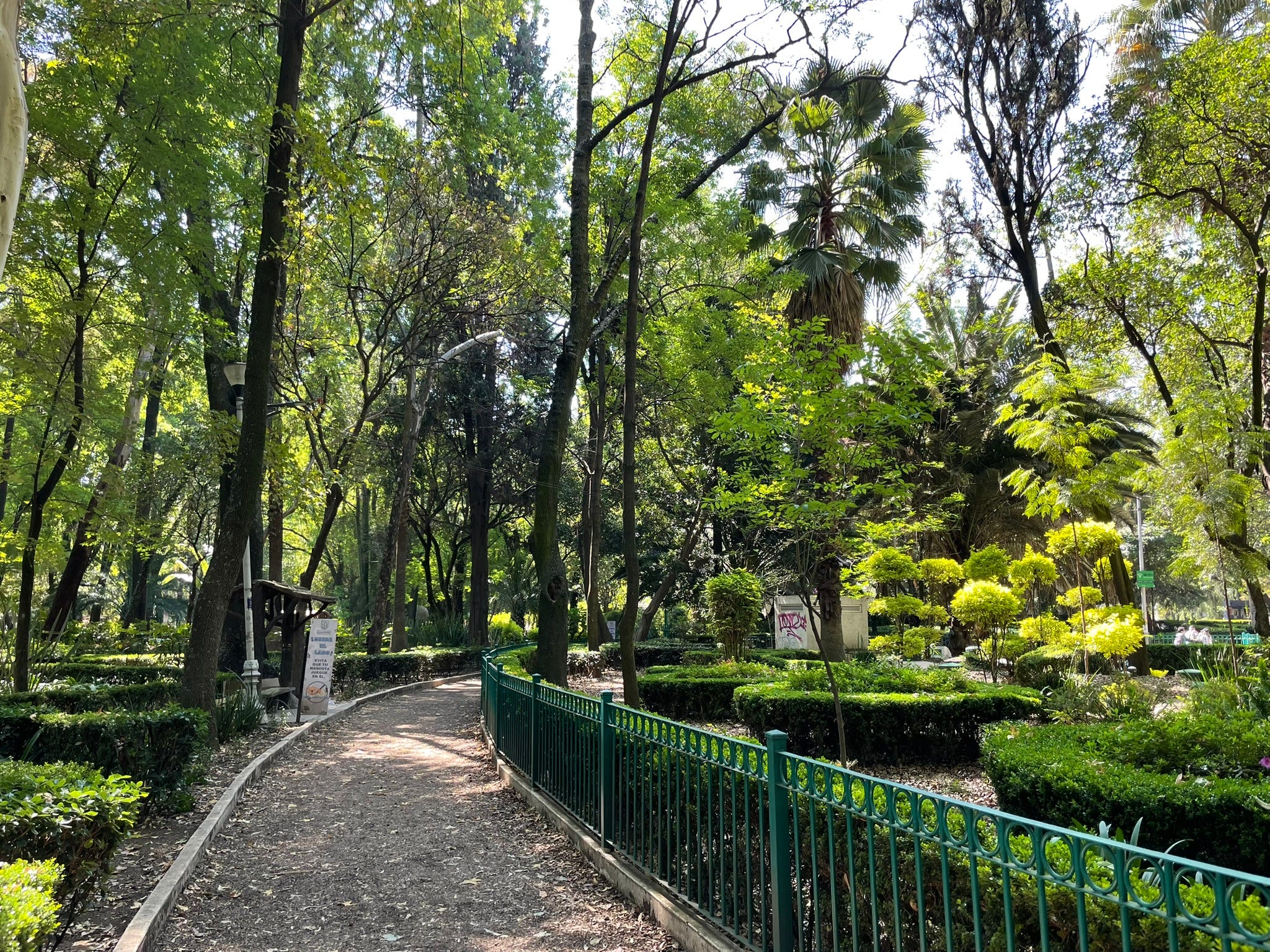
It turns out that it’s not just one park. Many parks are like this! And a number of major avenues have tree-lined medians with a path through the middle.
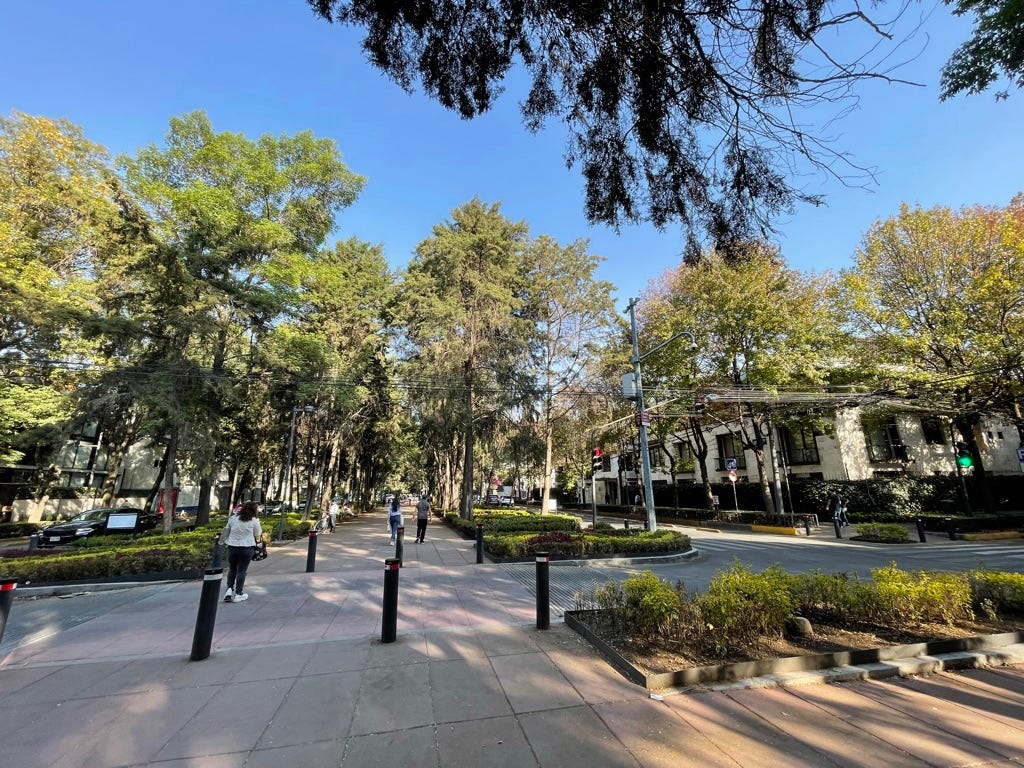
Walk around and it’s impressive how much greenery they fit in!
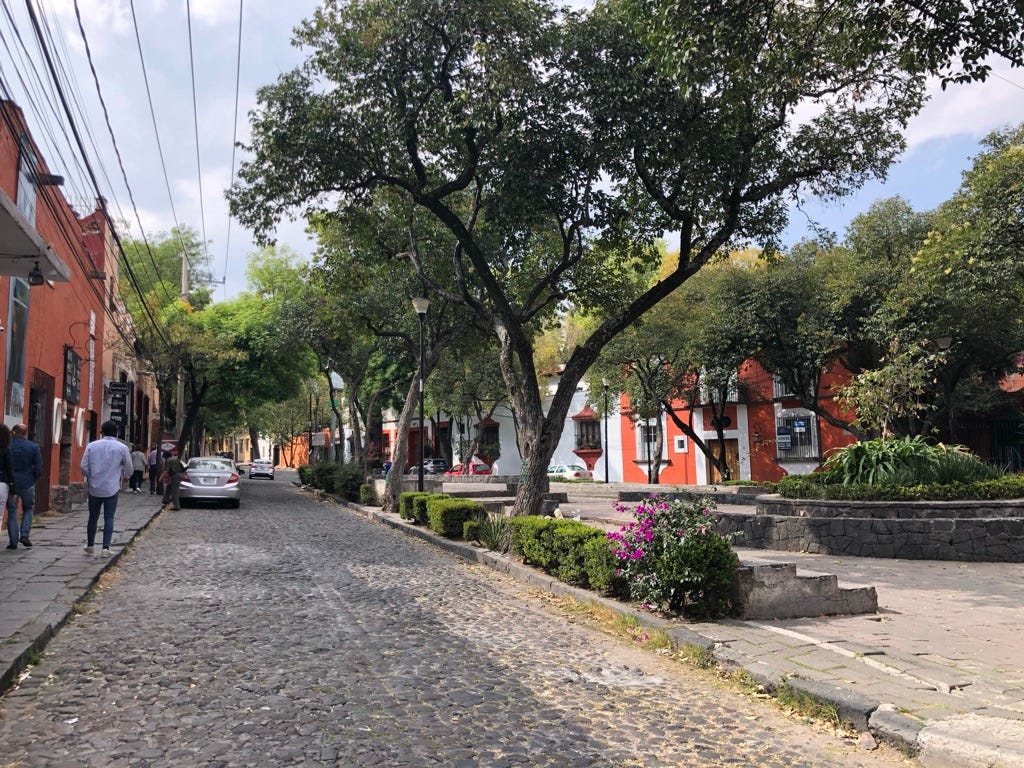
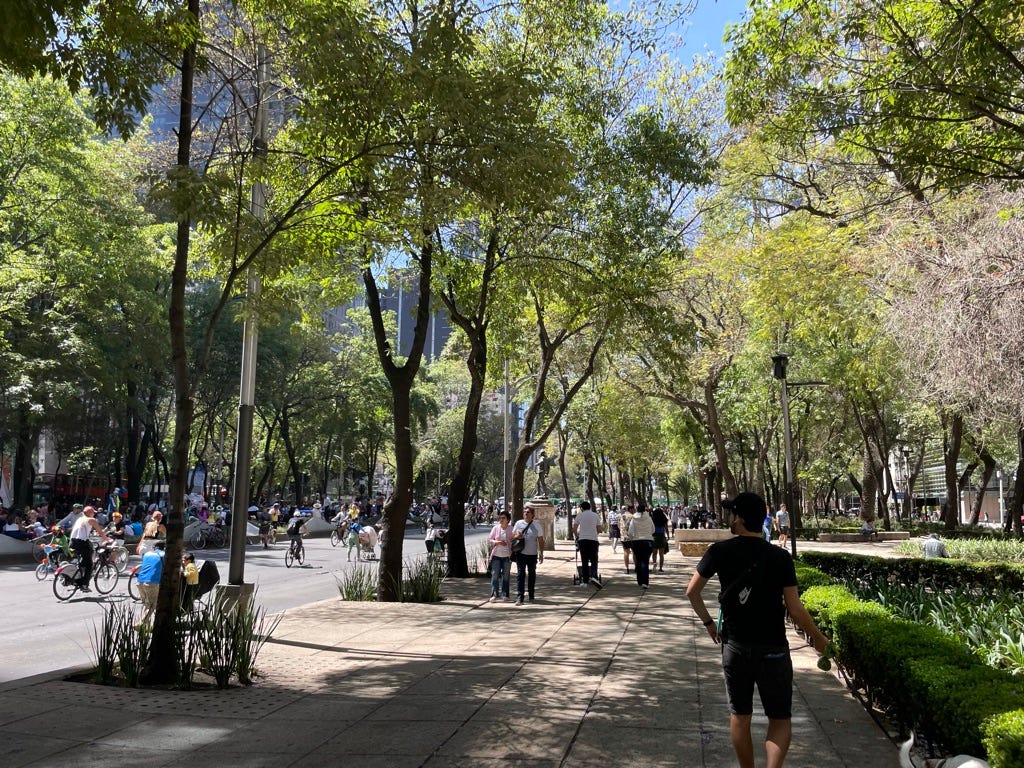
Many buildings have tree-filled courtyards, with some restaurants having seating in such spaces.
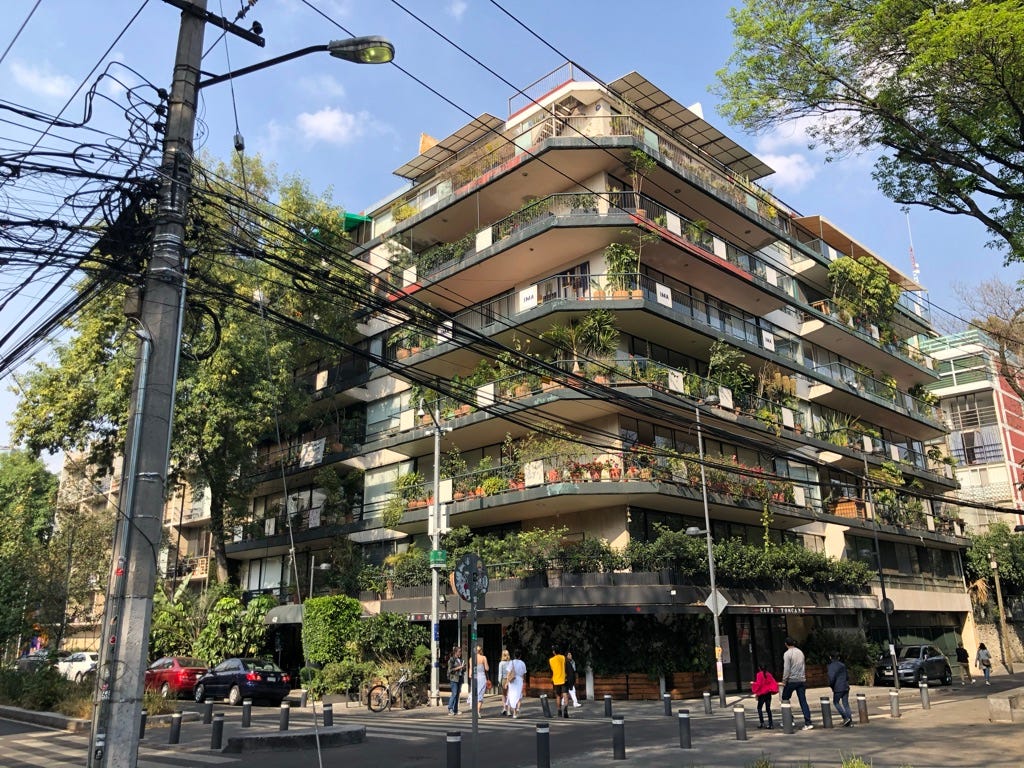
Lots of people put plants out on balconies:
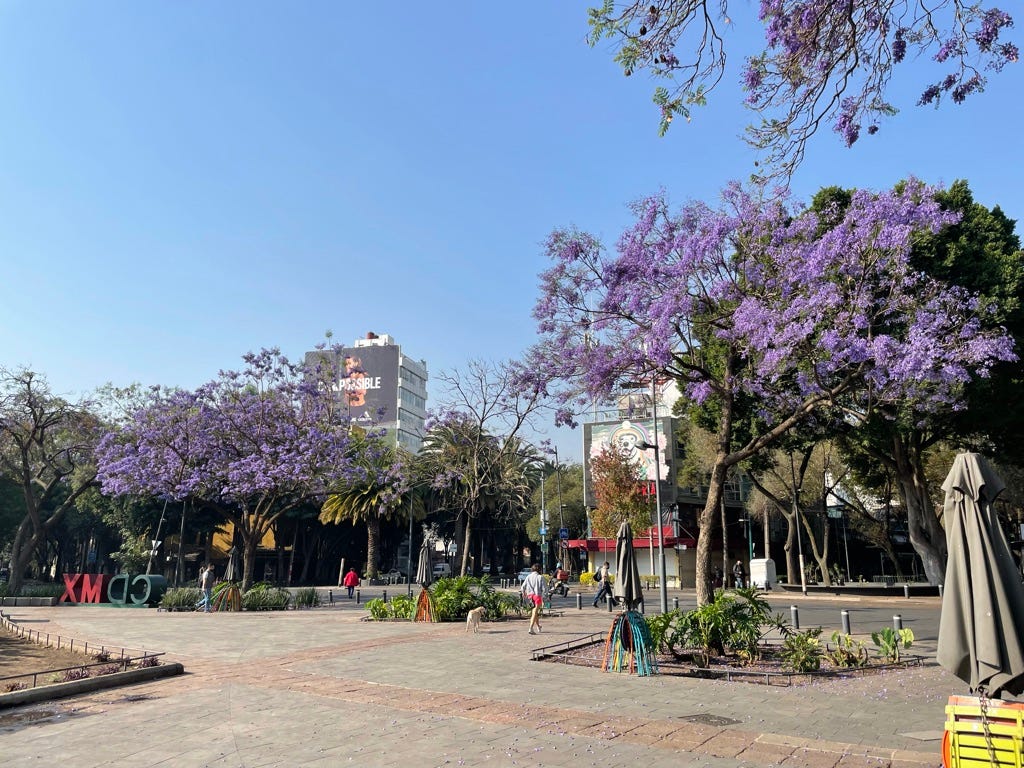
And who can forget the striking purple jacaranda trees, which bloom around March?
I’ve been to neighborhoods all over the city, and while not every single block looks like this, the lush greenery extends far beyond the touristy areas.
2. Singapore
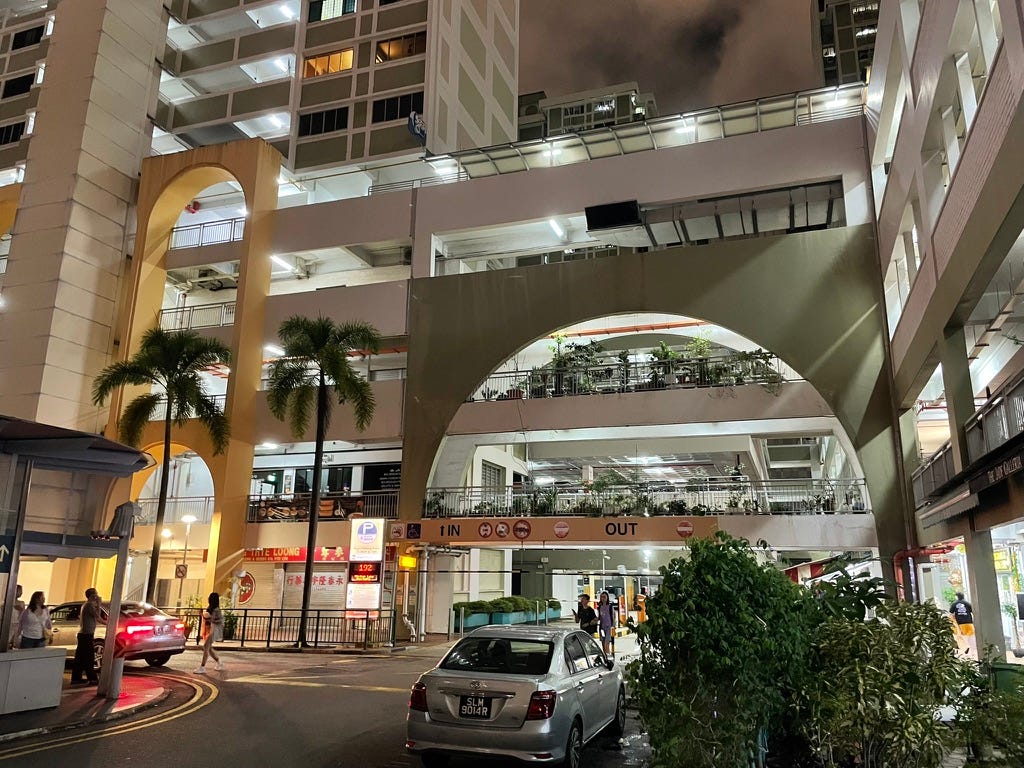
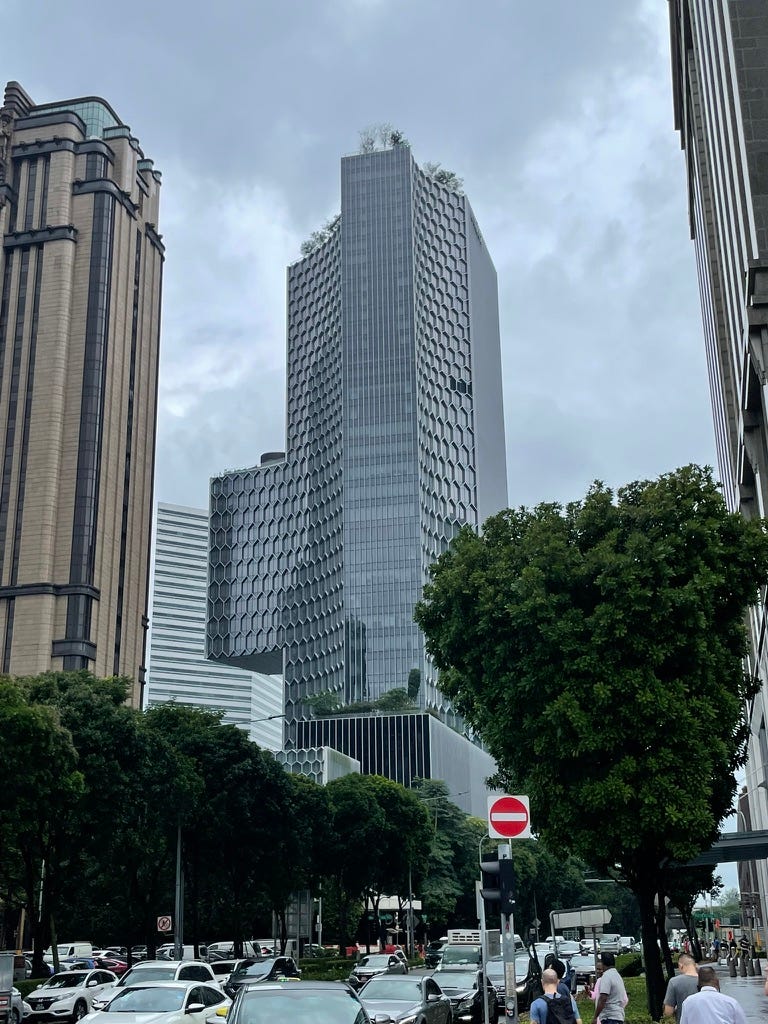
Over on the other side of the world, what I found particularly striking about Singapore is the extent to which trees and greenery are incorporated into buildings:
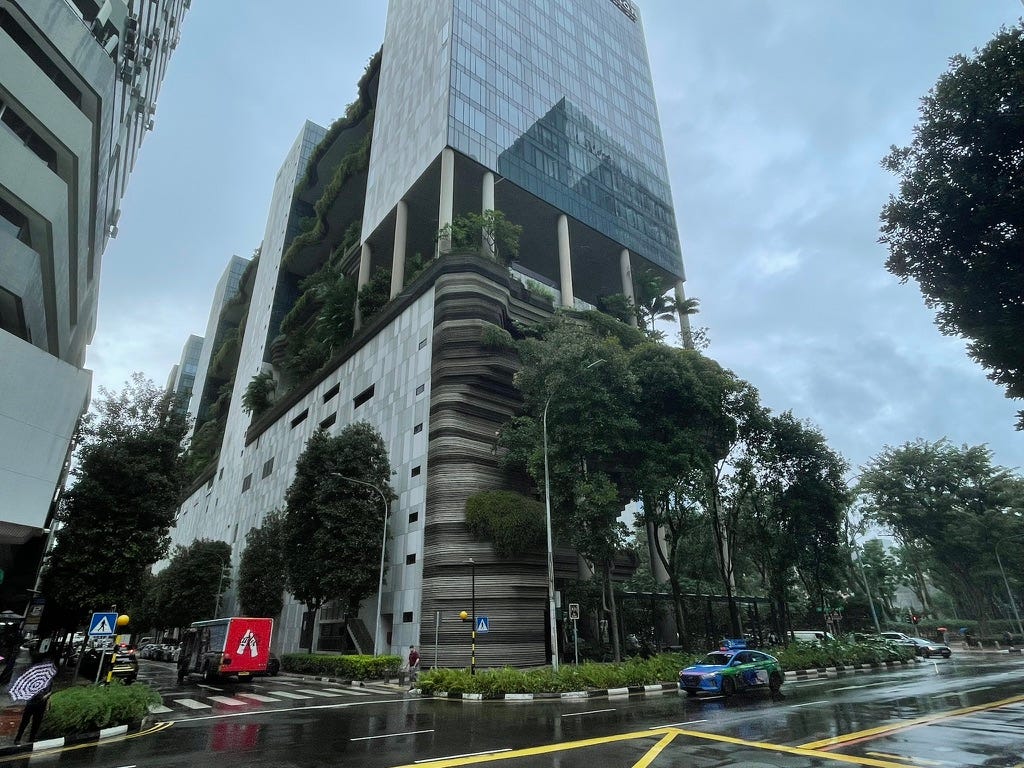
I was particularly impressed by how often I would look at a building then realize upon closer inspection that its rooftop and/or balconies had trees hiding in plain sight:
I even found a metro station with a plant wall!
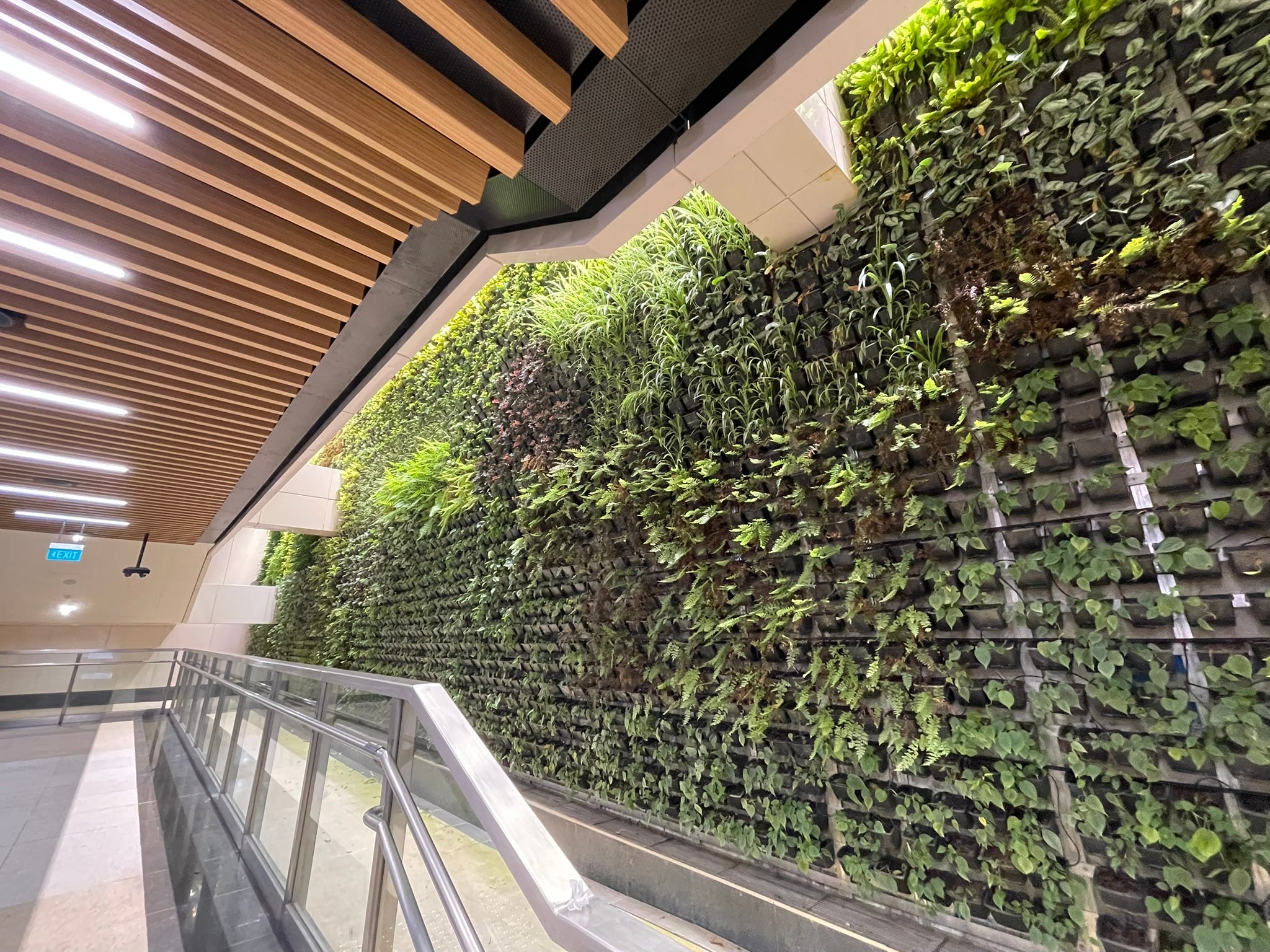
Combined with the drizzly weather, I found that Singapore really had an “urban jungle” vibe.
3. Hiding ugly buildings
Many cities have an unfortunate number of ugly buildings. While it’s best to not build ugly buildings, it’s not always sensible to knock down existing ones. But trees can come to the rescue!
Here’s a building in London that I find quite ugly:
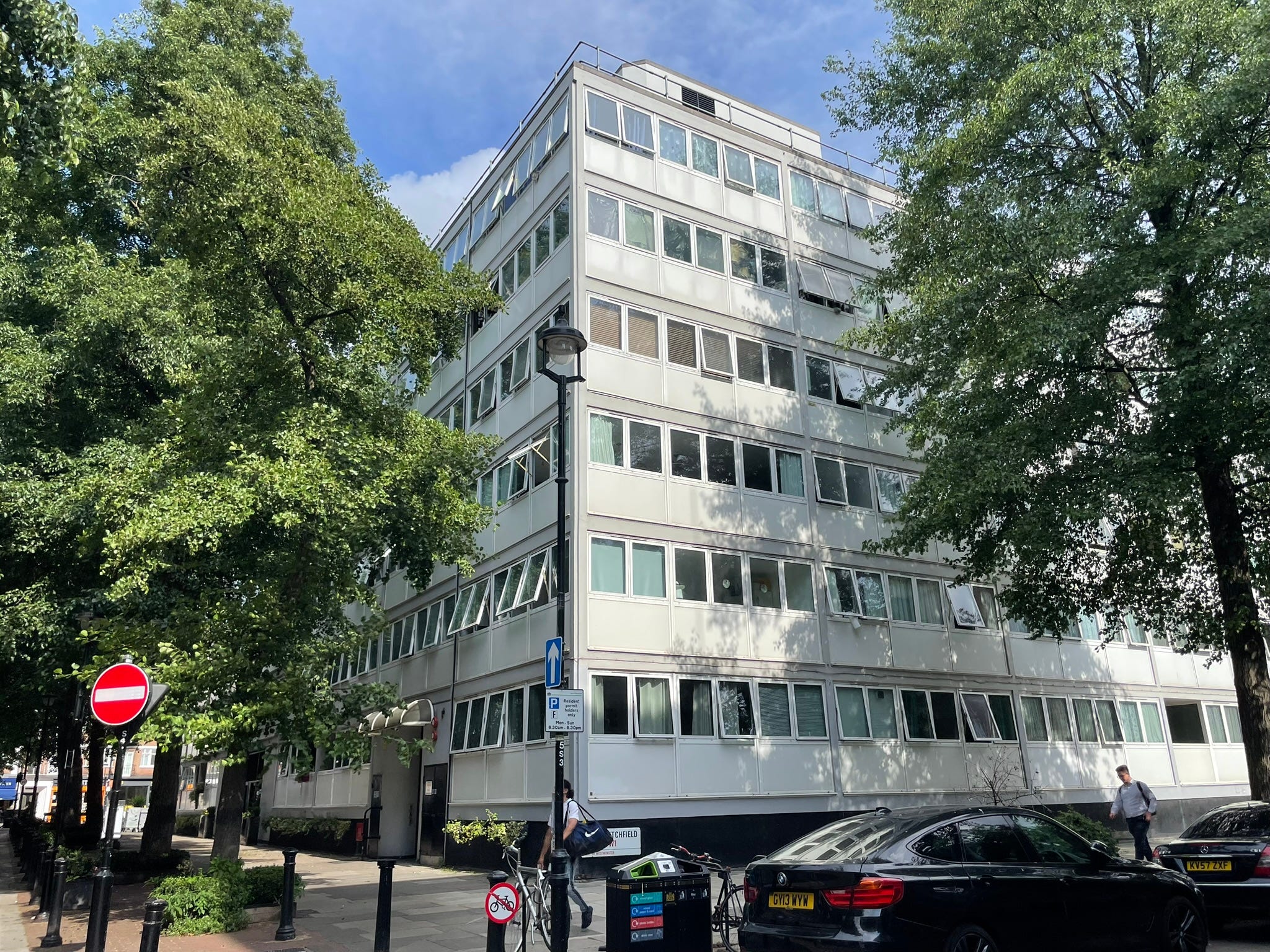
But here’s what it looks like from the other side of the street:
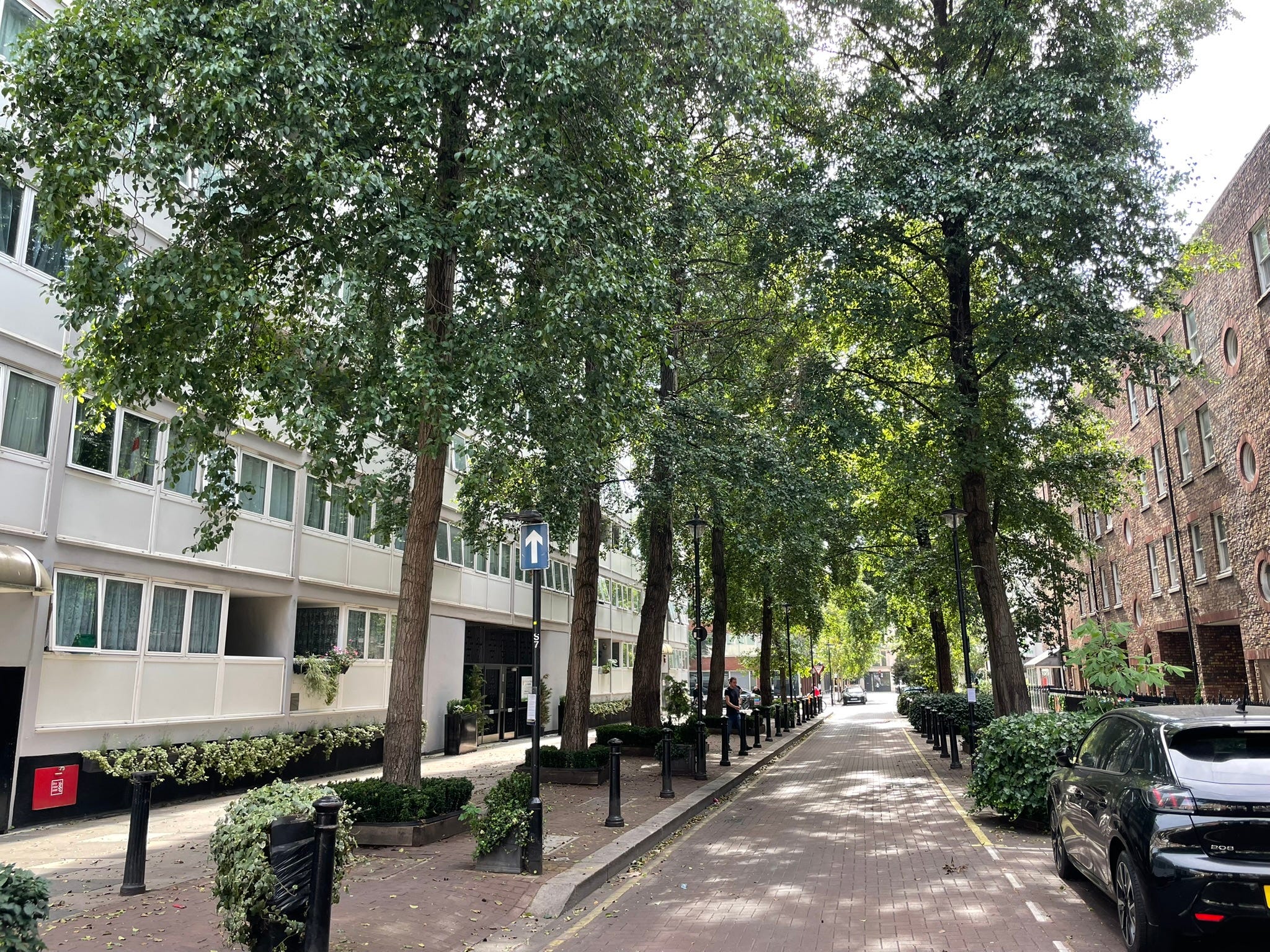
The street is quite pleasant! The trees do double duty: they’re awesome on their own + they help hide the ugly building.
4. What about nice buildings?
Of course, trees can also hide pretty buildings.
Here’s the beautiful Palacio de Hierro in Orizaba, Mexico, designed by Gustave Eiffel. (Yes, the guy who also designed the Eiffel Tower.)
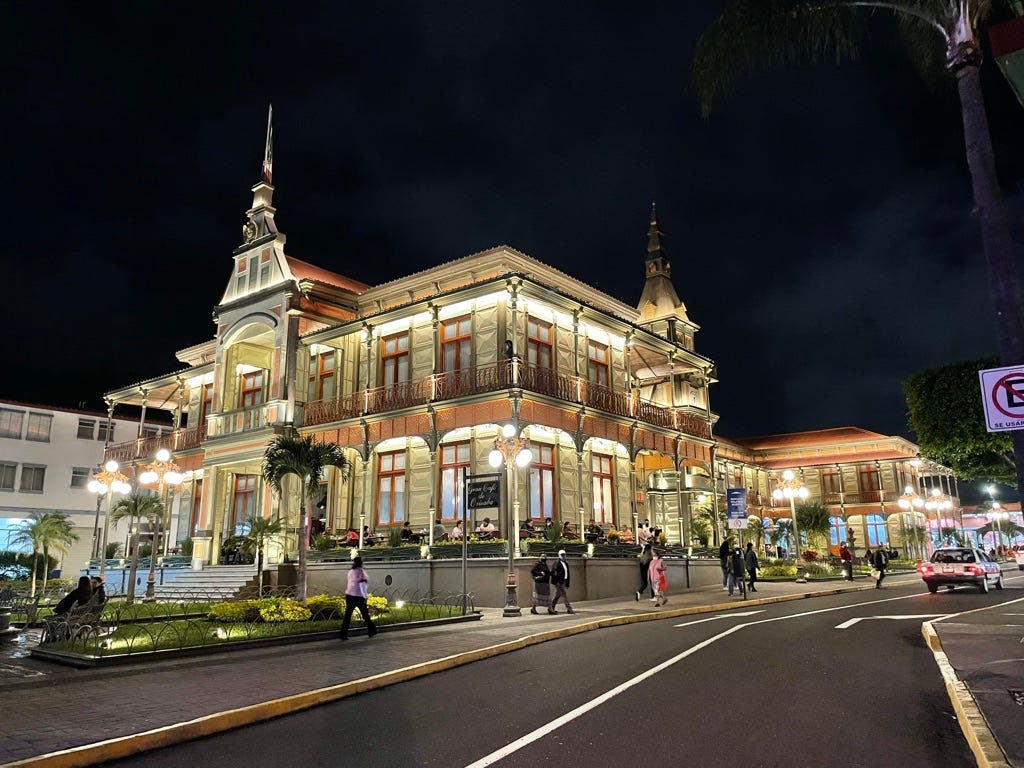
You wouldn’t want to block this with a bunch of large trees, would you?
The same goes for this street in Antigua Guatemala, with old colonial buildings, an arch, and a volcano in the background.
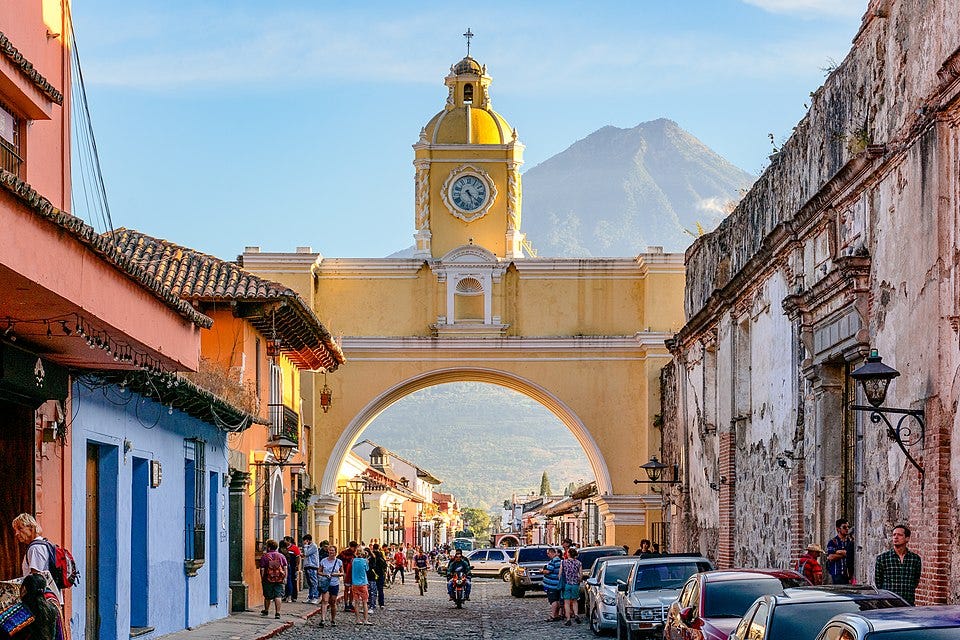

As one more example, here’s Times Square in New York:
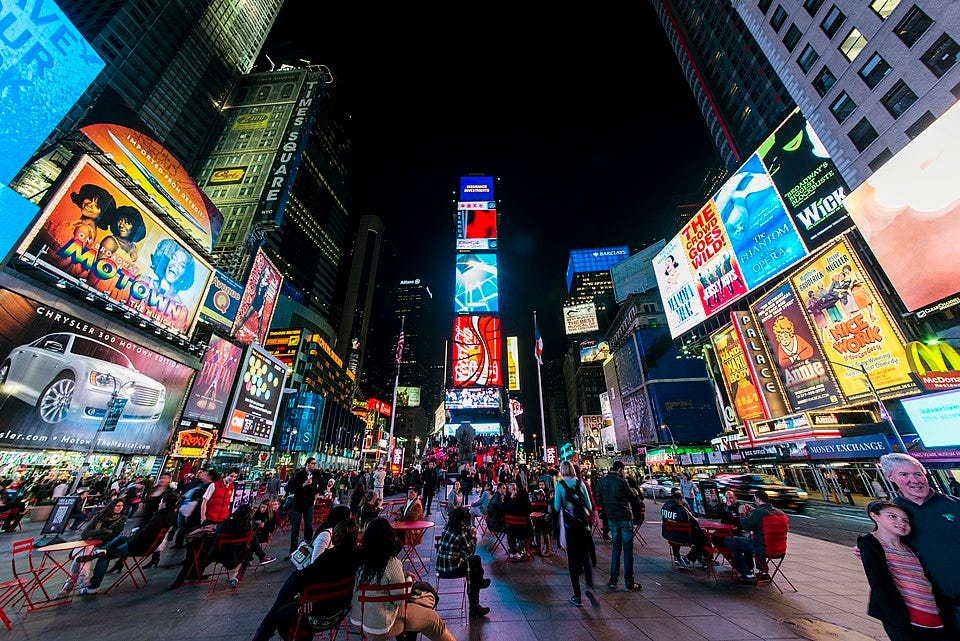

Times Square is notably lacking in trees, both before and since its major renovation around a decade ago.
That’s fine. People don’t visit Times Square for its greenery—and trees would block the view of the famous billboards, ruining the whole vibe. But places like this should be exceptions, not the norm.
Paris takes this too far. There are tons and tons of streets that look like this:
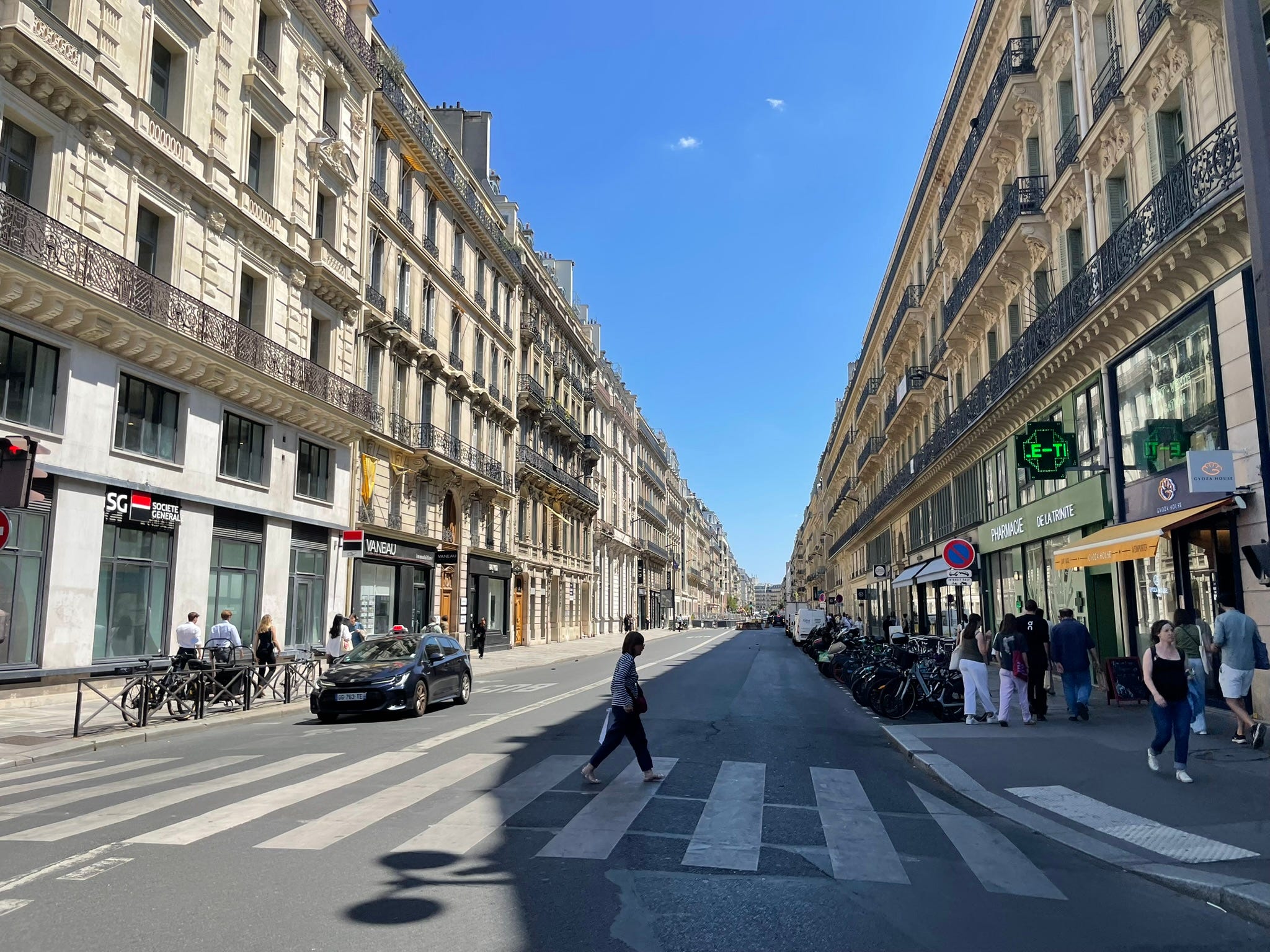
Individually, the buildings are pretty! But when street after street looks like this, it can start to be a bit monotonous, not to mention (as the buildings are all white) lacking color.
In many cases, you can add trees without taking away from the architecture too much. Take this street, for example:
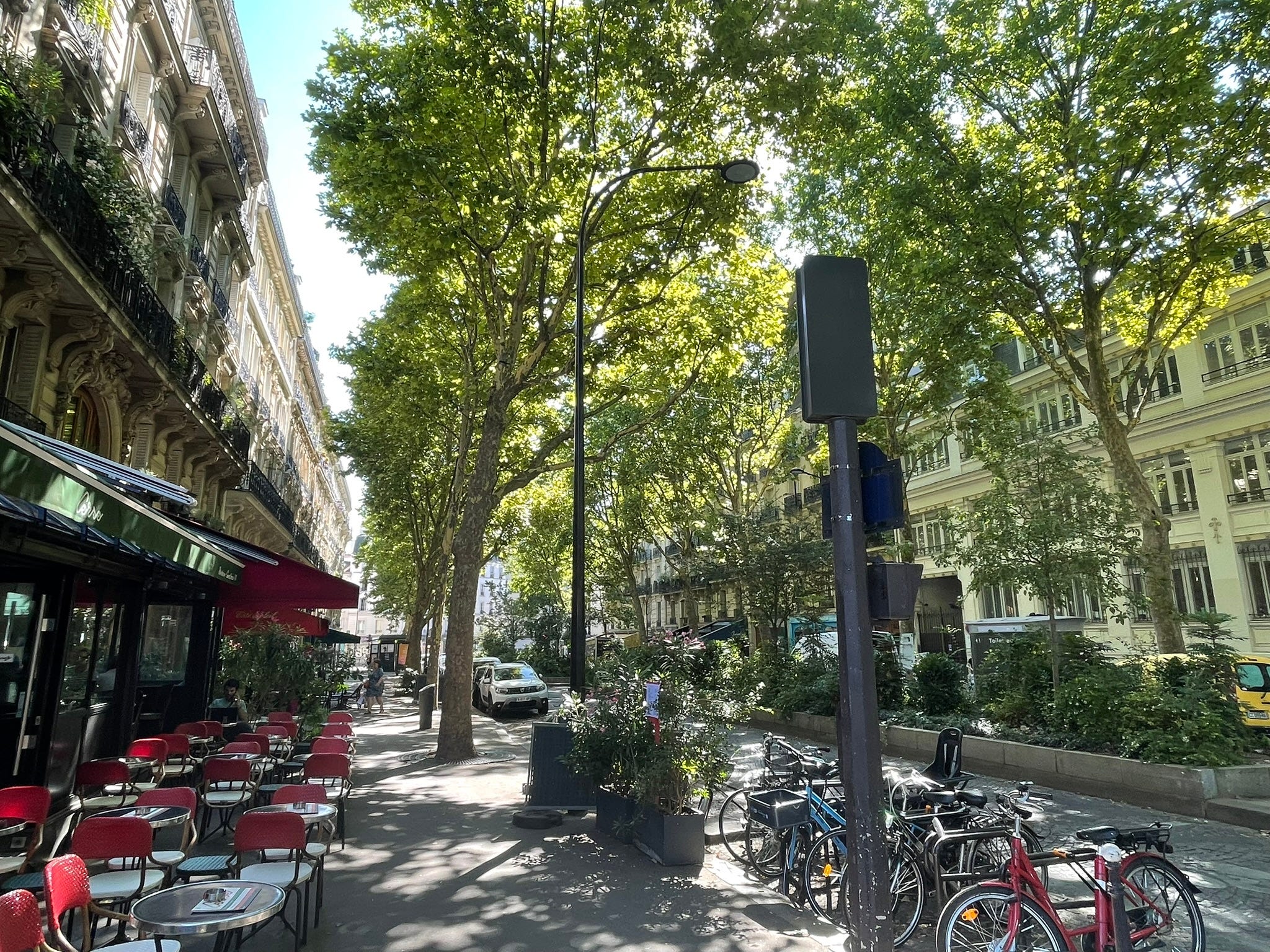
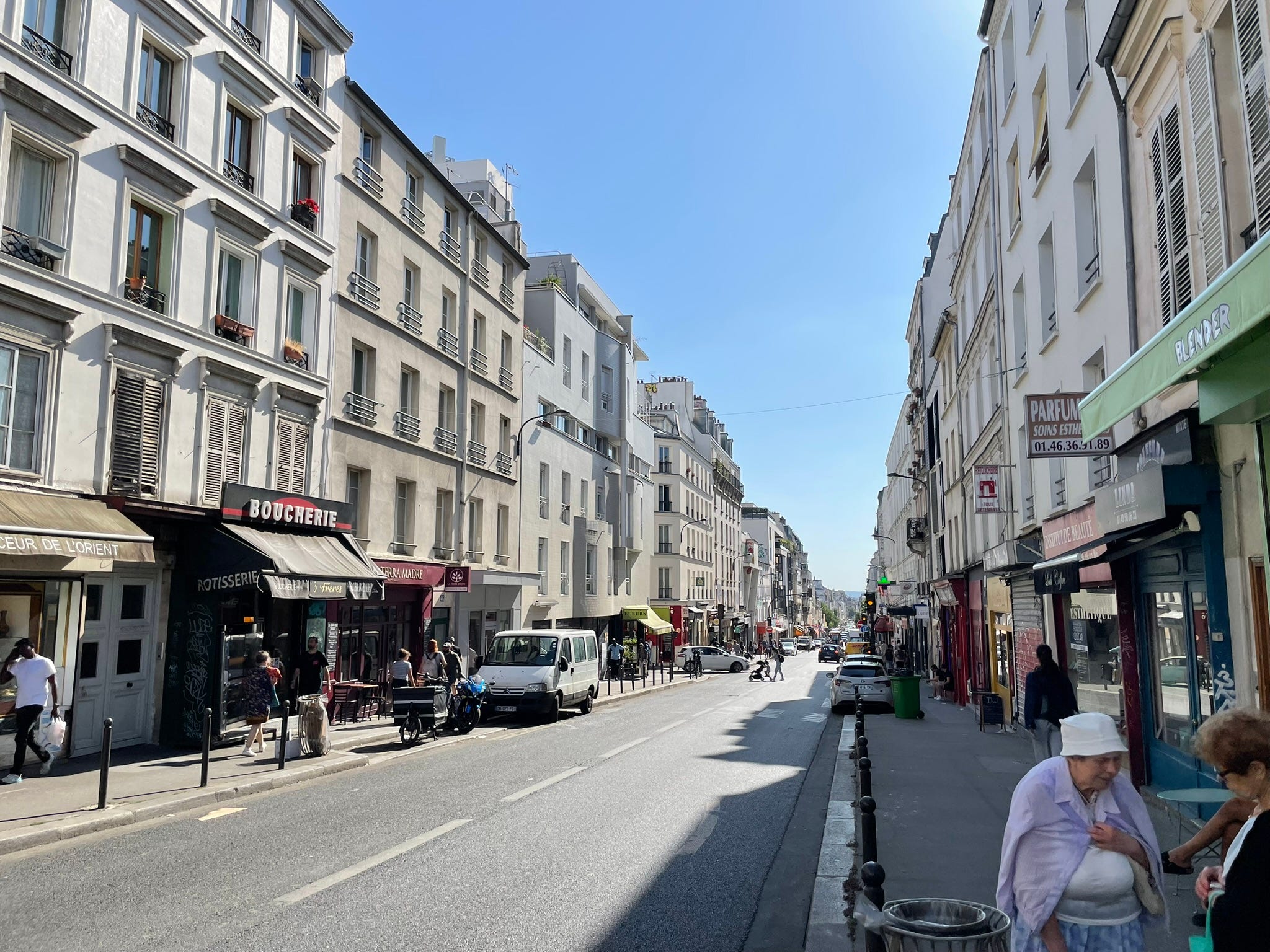
And a lot of streets in Paris are tree-free despite having less-than-stellar architecture; they should be easy candidates for adding trees.
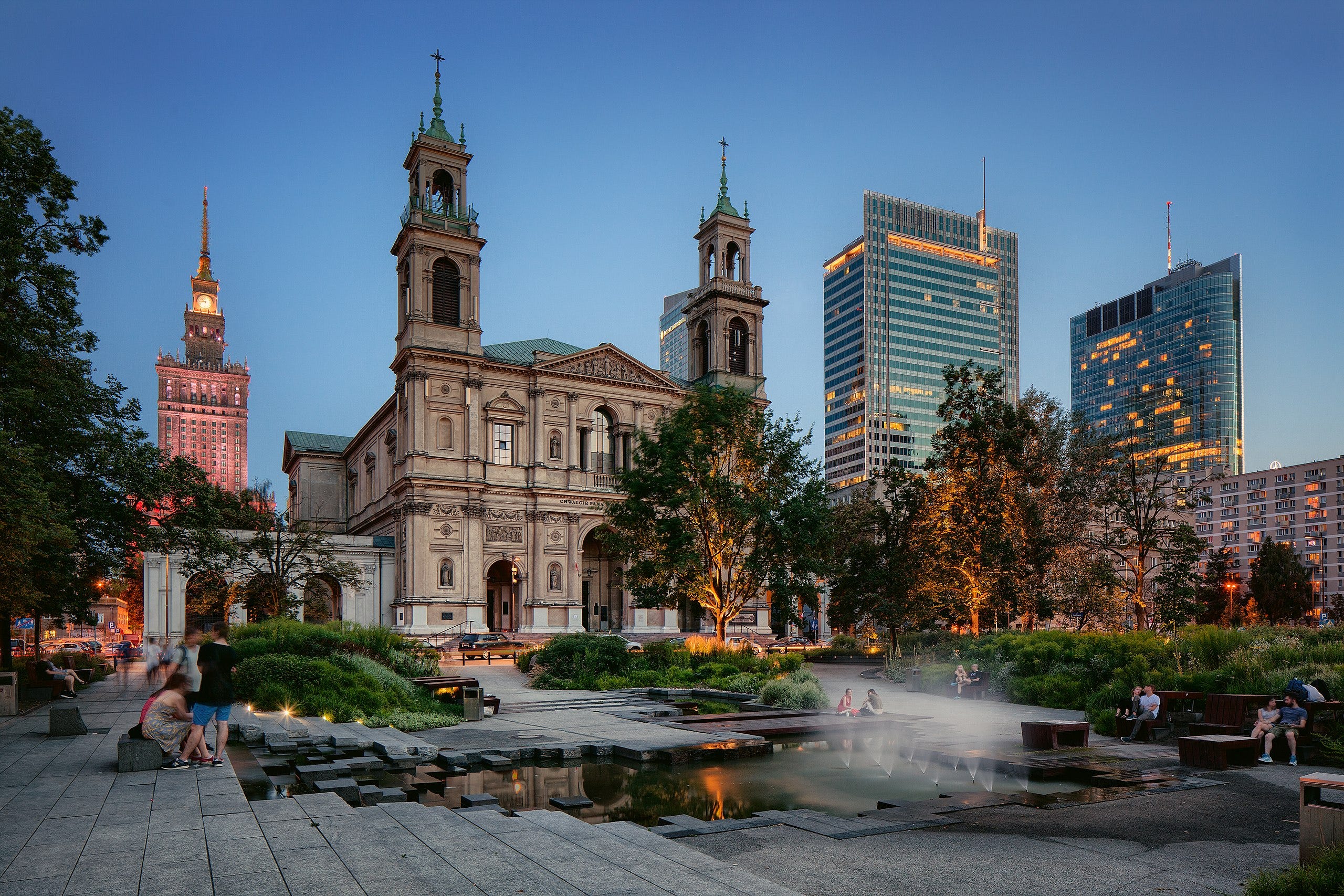
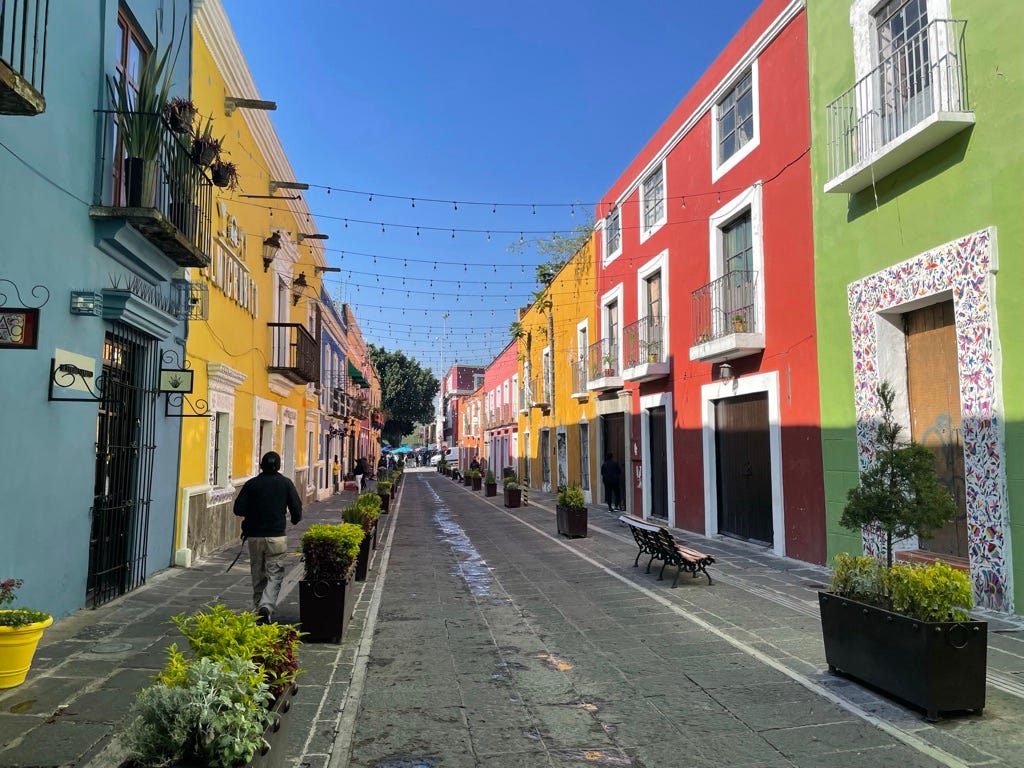
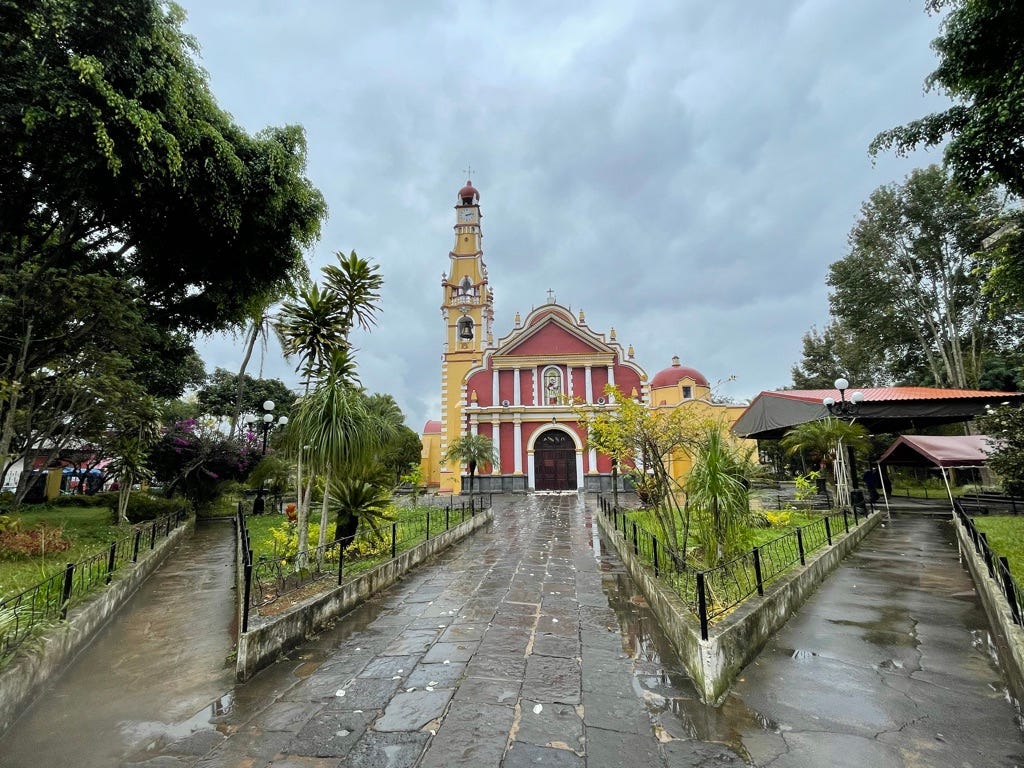
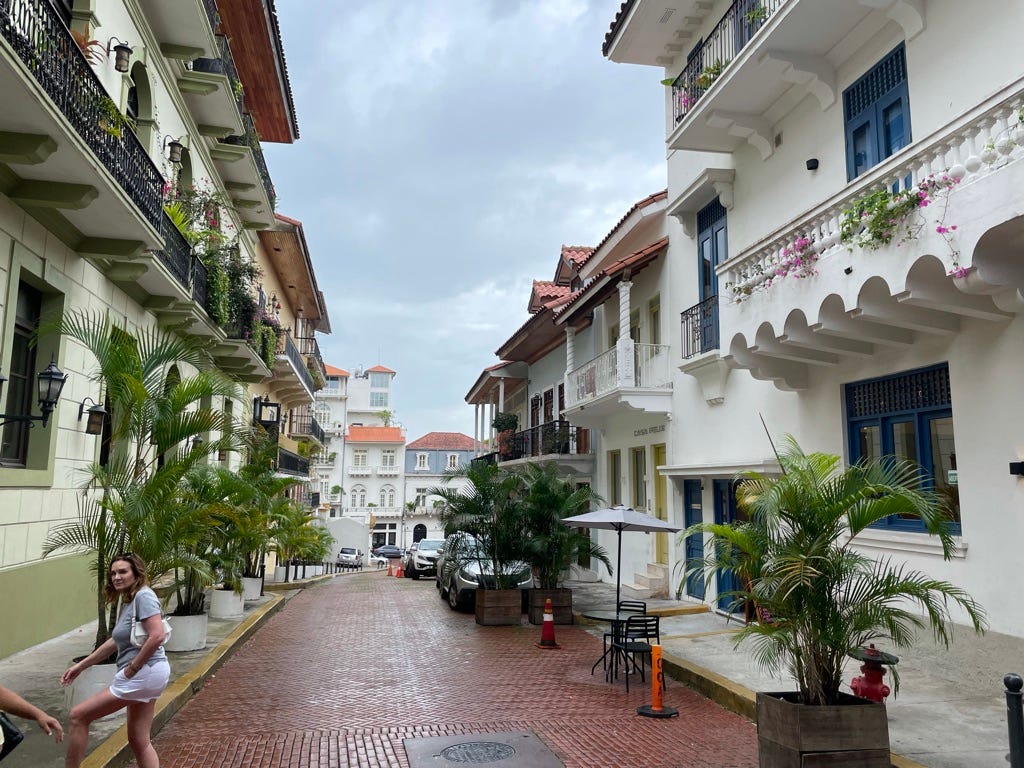
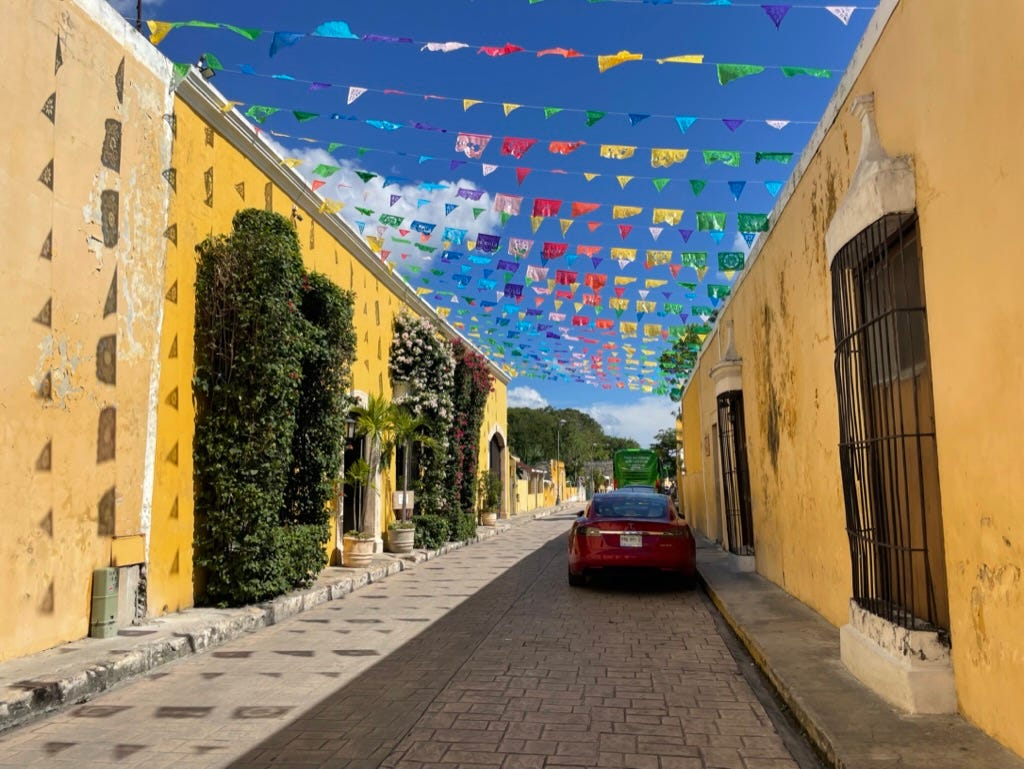
In places with architecture that’s really worth spotlighting, you can carefully arrange trees to preserve views of key buildings and focus greenery choices on shorter plants. Here are a few examples from around the world:

5. Lush airports
Of course, one of the main places where we spend time in cities isn’t just outdoors, it’s indoors. And we could be doing a lot more to bring trees indoors!
In January, I took what I call the “jungle jump” flight, connecting Doha and Singapore—the world’s two most famous examples of airports with indoor forests.
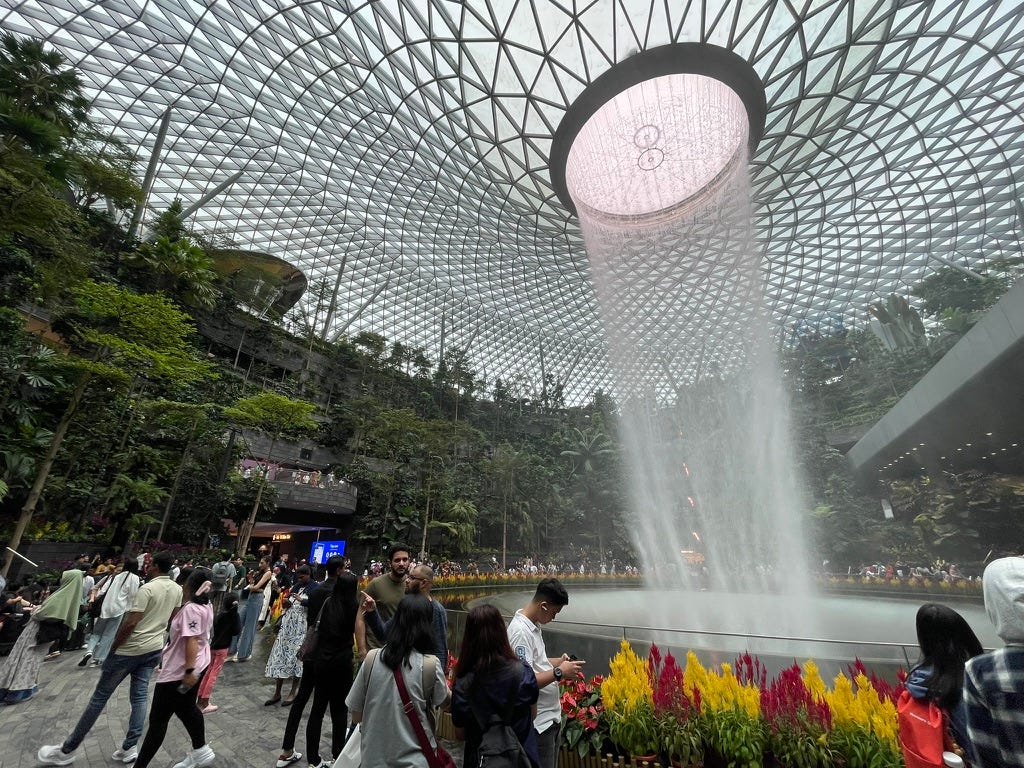
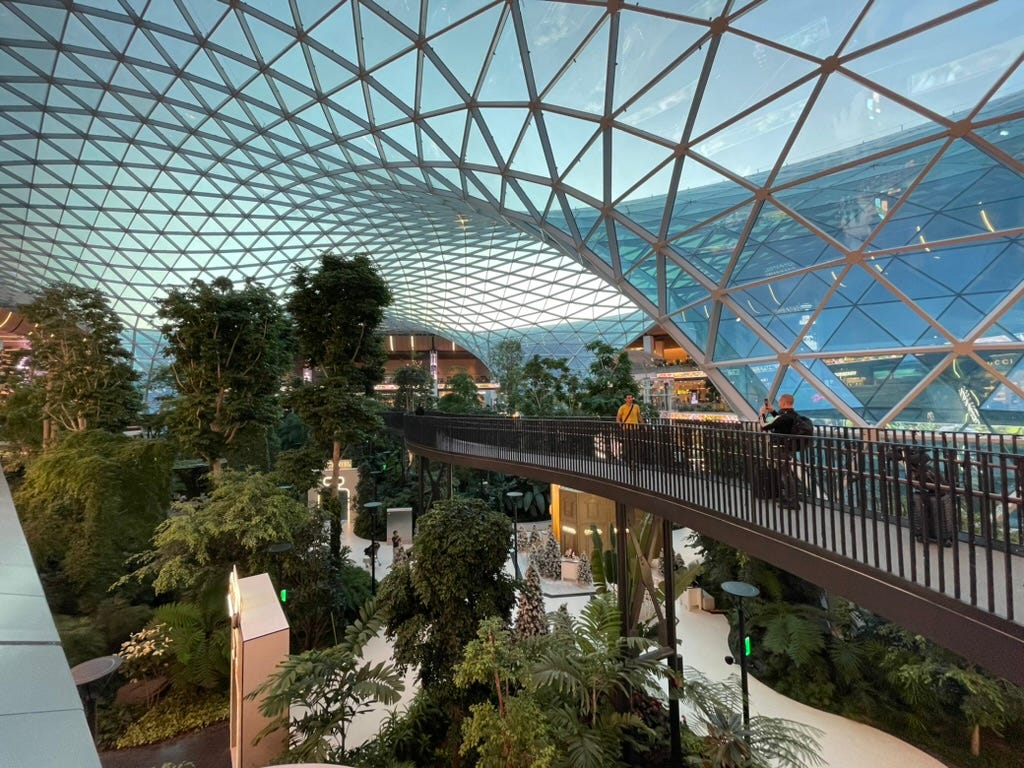
This is quite different from airports that lack trees. Here’s the newest concourse at my home airport of DCA:
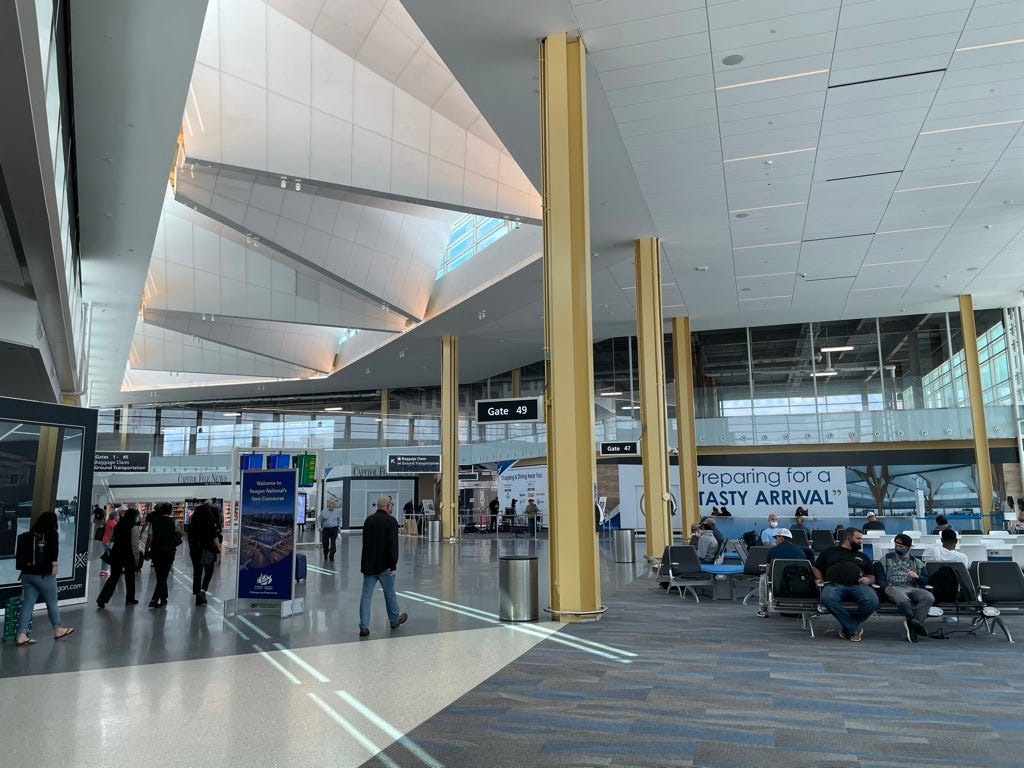
It’s nice, but some greenery would be even nicer.
Greenery indoors is great in all sorts of contexts, but especially those (like airports) where people are often stressed out, as trees have been shown to decrease stress.
6. Mass timber
Speaking of bringing trees indoors, one great opportunity is by constructing buildings of mass timber:
Mass timber, also known as engineered timber, is a class of large structural wood components for building construction. … Mass timber has been shown to have structural properties competitive with steel and concrete, opening the possibility to build large, tall buildings out of wood.
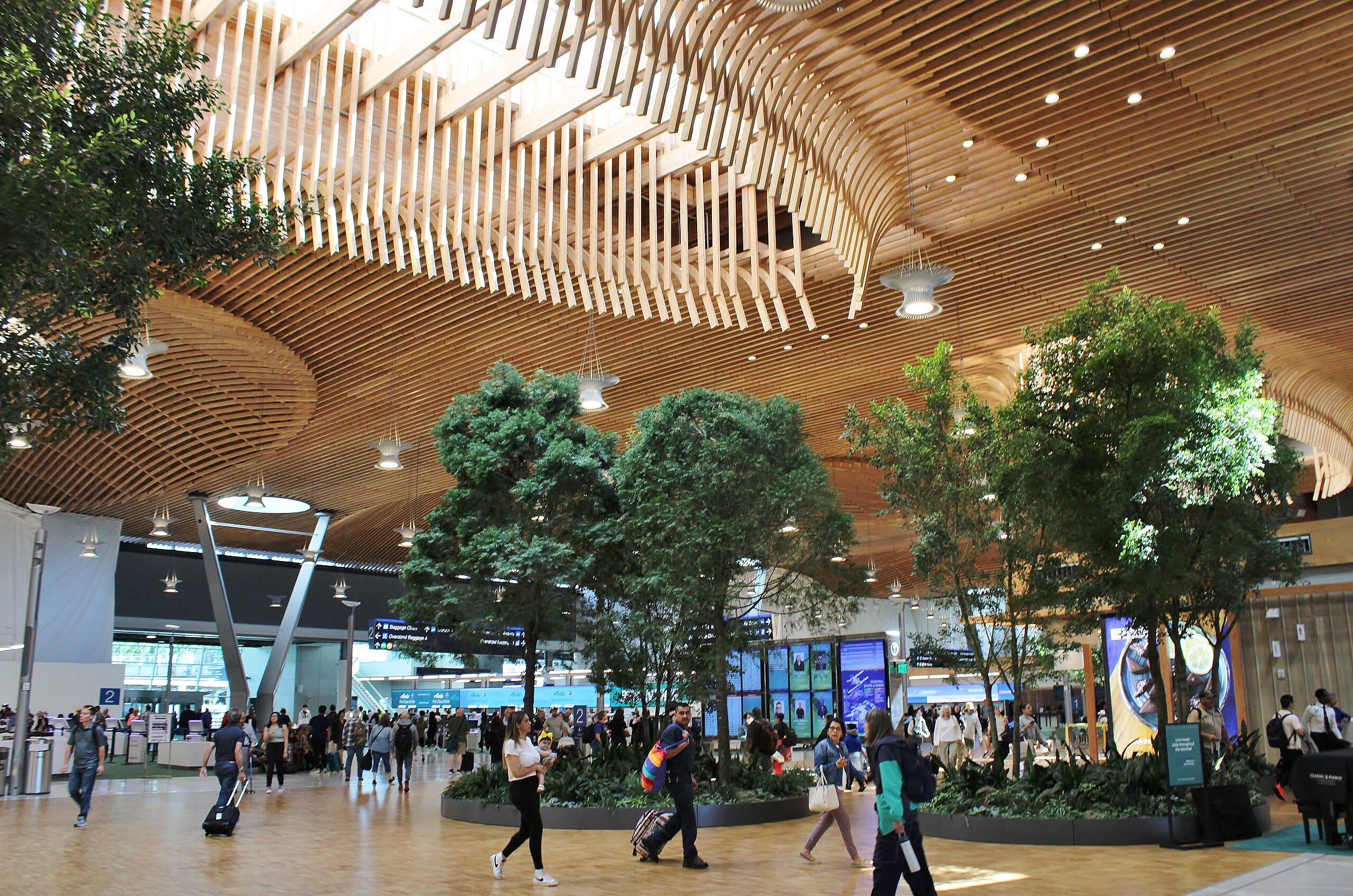
An exciting example is the new airport terminal in Portland, Oregon:
.jpg)
It’s a fitting aesthetic for this airport in particular, as “pine forests are integral to the Pacific Northwest in the American consciousness,” notes Edward Russell in his blog Airport Architecture.
The design for Gelephu airport in Bhutan also makes use of mass timber plus indoor greenery. Russell writes (with many photos):
The wood beams that make up the structure of Gelephu showcase Bhutanese carpentry, carving, painting, and weaving… . Greenery, as part of a “forest spine,” will connect the landside and airside of the airport while separating domestic and international functions. There’s even a treetop walkway.
Here’s a video exploration:
And those are just examples from airports. There are an increasing number of ordinary city buildings being made from mass timber, an exciting development.
This matters a lot for cities, as it’s common for small buildings to be constructed of wood but rare for taller buildings, so this is a genuine opportunity to bring more wood indoors for city-dwellers specifically.
It’s time for ‘jungle-fication’
Trees are great! There are endless opportunities to incorporate more of them into our cities, both outdoors and indoors. We should push ourselves to think more boldly.
[For more musings on this topic, check out Luca Gattoni-Celli’s post on this subject—which was the inspiration for this one.]
People love to talk about urban gentrification. Let’s talk about “jungle-fication”!
What city has the best trees you’ve ever seen? Can you think of any opportunities for incorporating much more greenery where you live?